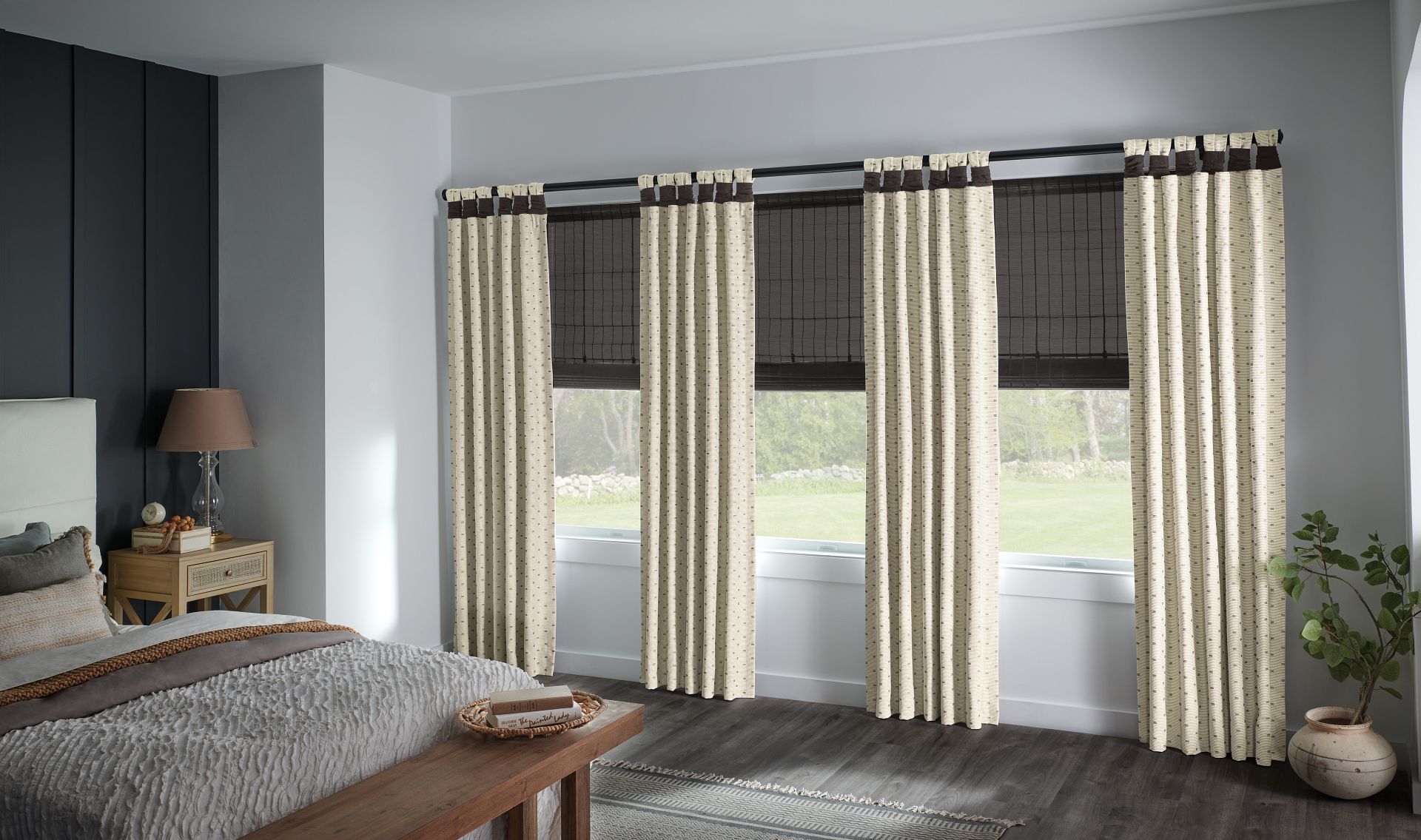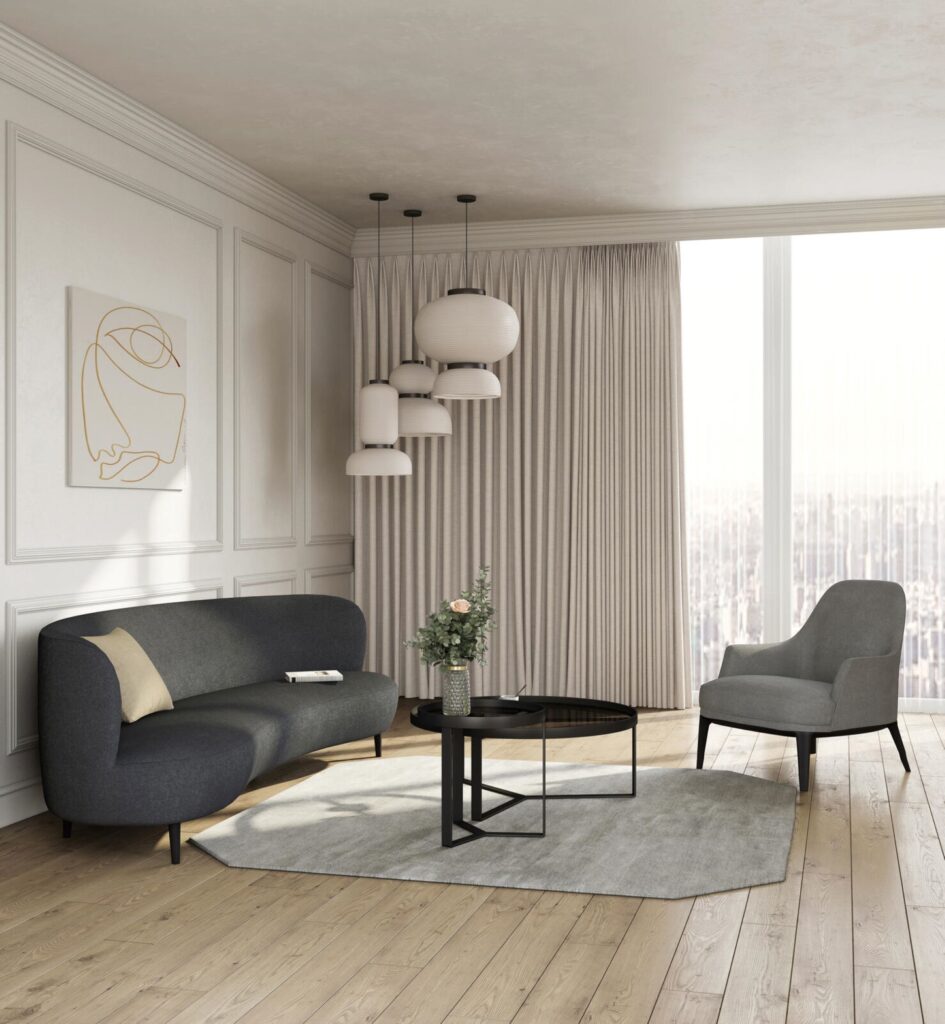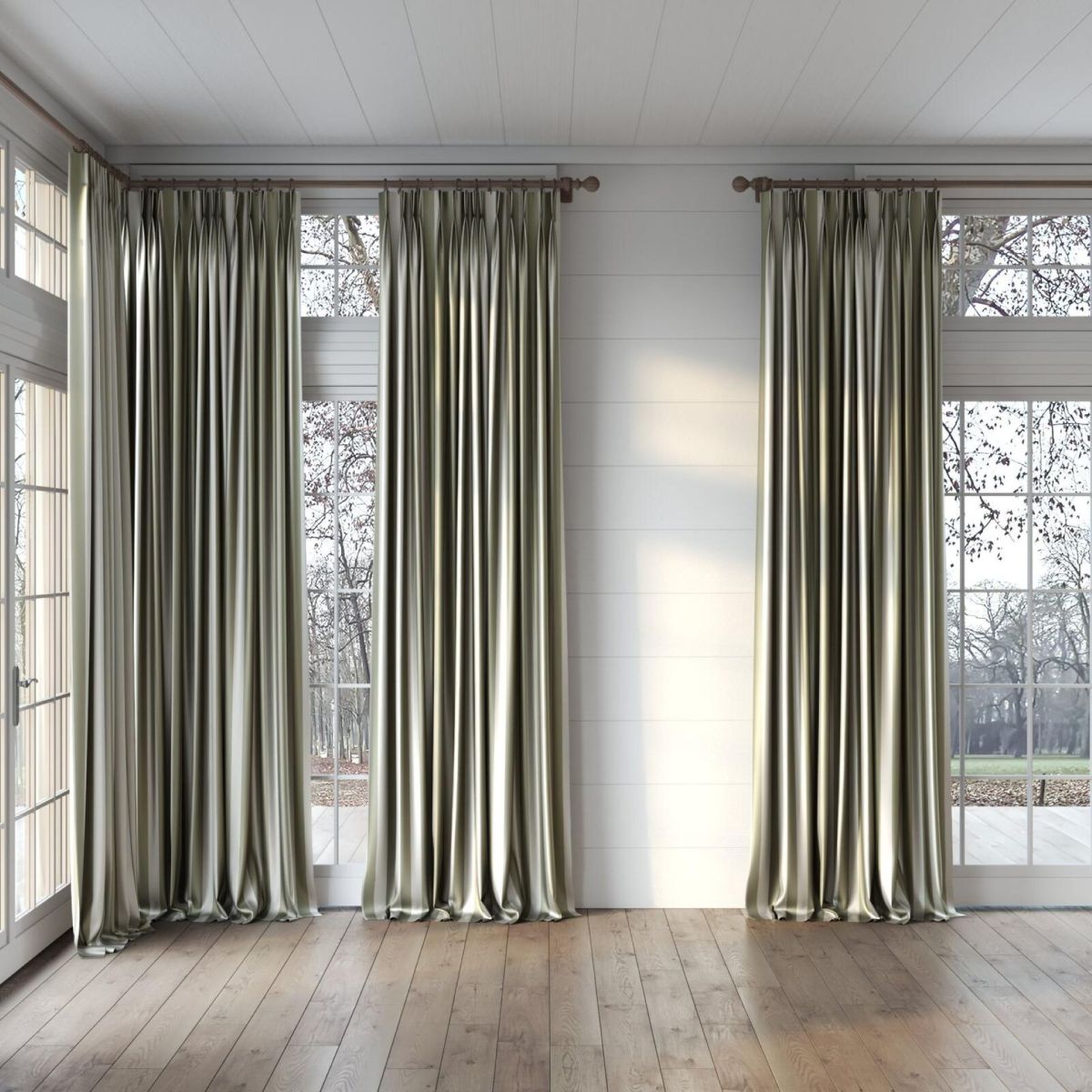
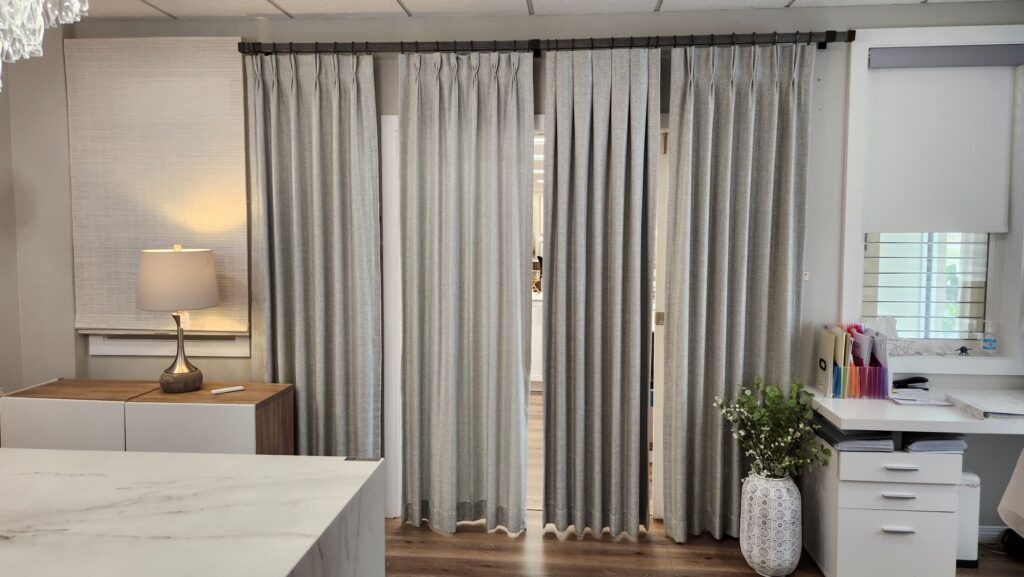
The pleat style you choose for your custom draperies significantly impacts the over all look and feel of your window treatments and the room.
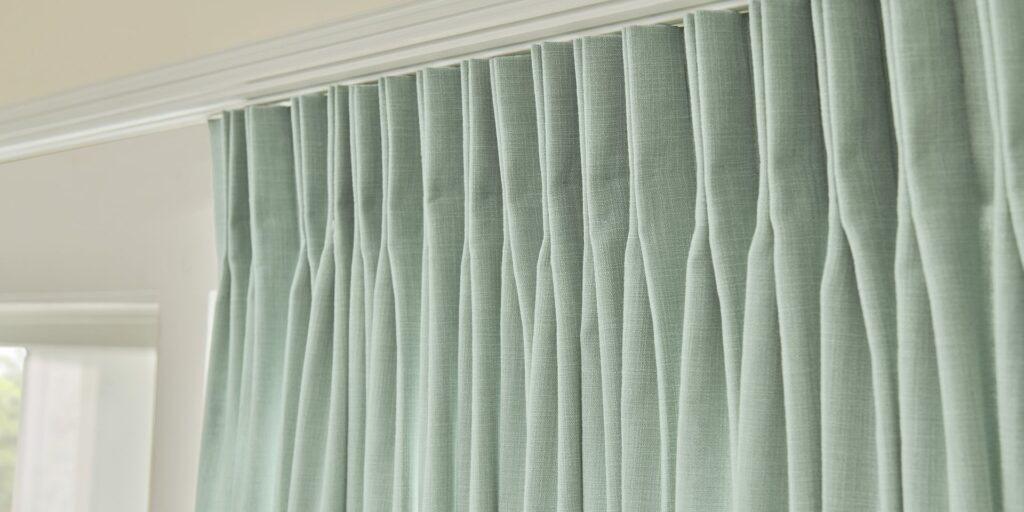
Pinch Pleats
Pleats are spaced evenly across the panel and “pinched” at either 4″ or 6″ below the top depending on the length of your panel (this can also be customized!). A good rule of thumb: longer panel, larger pinch. The pleats create fullness and ensure you have uniform folds. You can choose a double or a triple pinch.
Style: Classic, traditional (but still feels contemporary)
Also known as: Two-finger pleats, three-finger pleats, French pleats
Note: Some very thick fabrics cannot be pinched, but we can help advise.

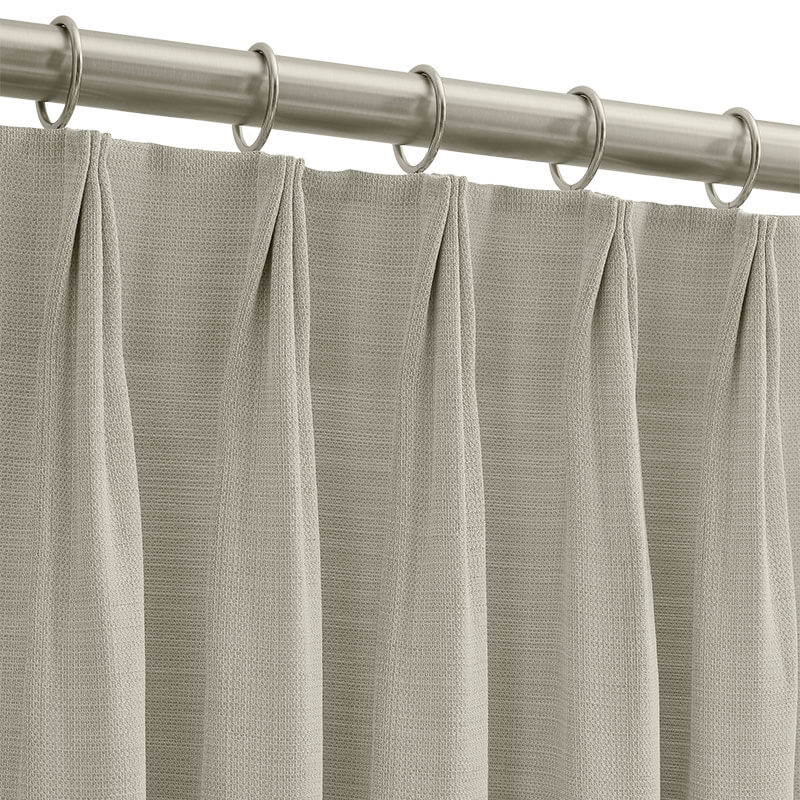
Top Pinch Pleats
Pleats are spaced evenly across the panel and “pinched” at the top, allowing the pleat to flare out. The pleats create fullness and ensure you have uniform folds. You can choose a double or a triple top pinch.
Style: Tailored, traditional
Also known as: Euro pleats, fan pleats
Note: Some very thick fabrics cannot be pinched, but we can help advise.

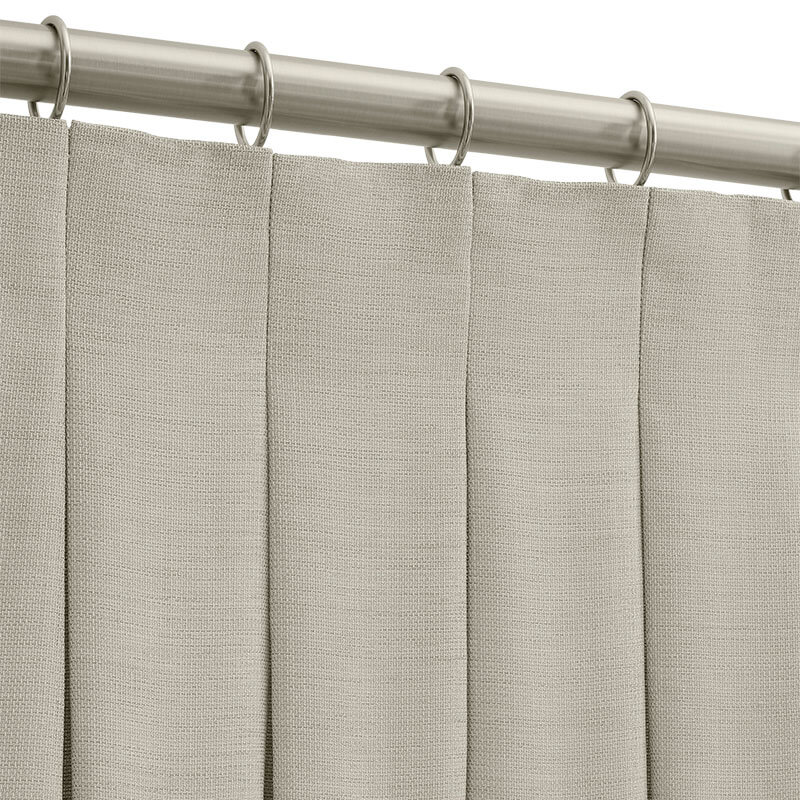
Inverted Pleats
The inverted pleat allows you to create fullness with the pleats but has a more streamlined look. The pleats are stitched in the back giving you a flat-faced front.
Style: Modern, contemporary
Also known as: Box pleats

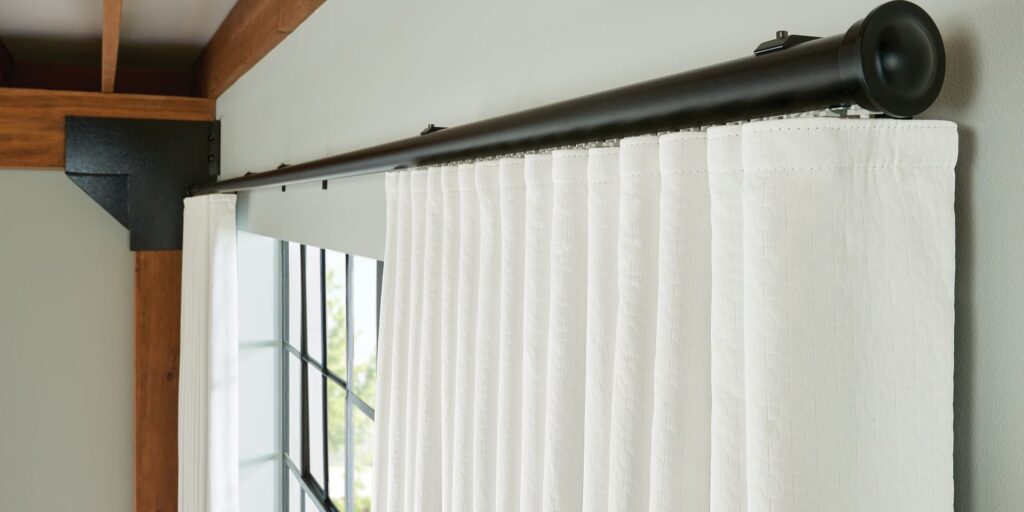
Ripplefold Pleats
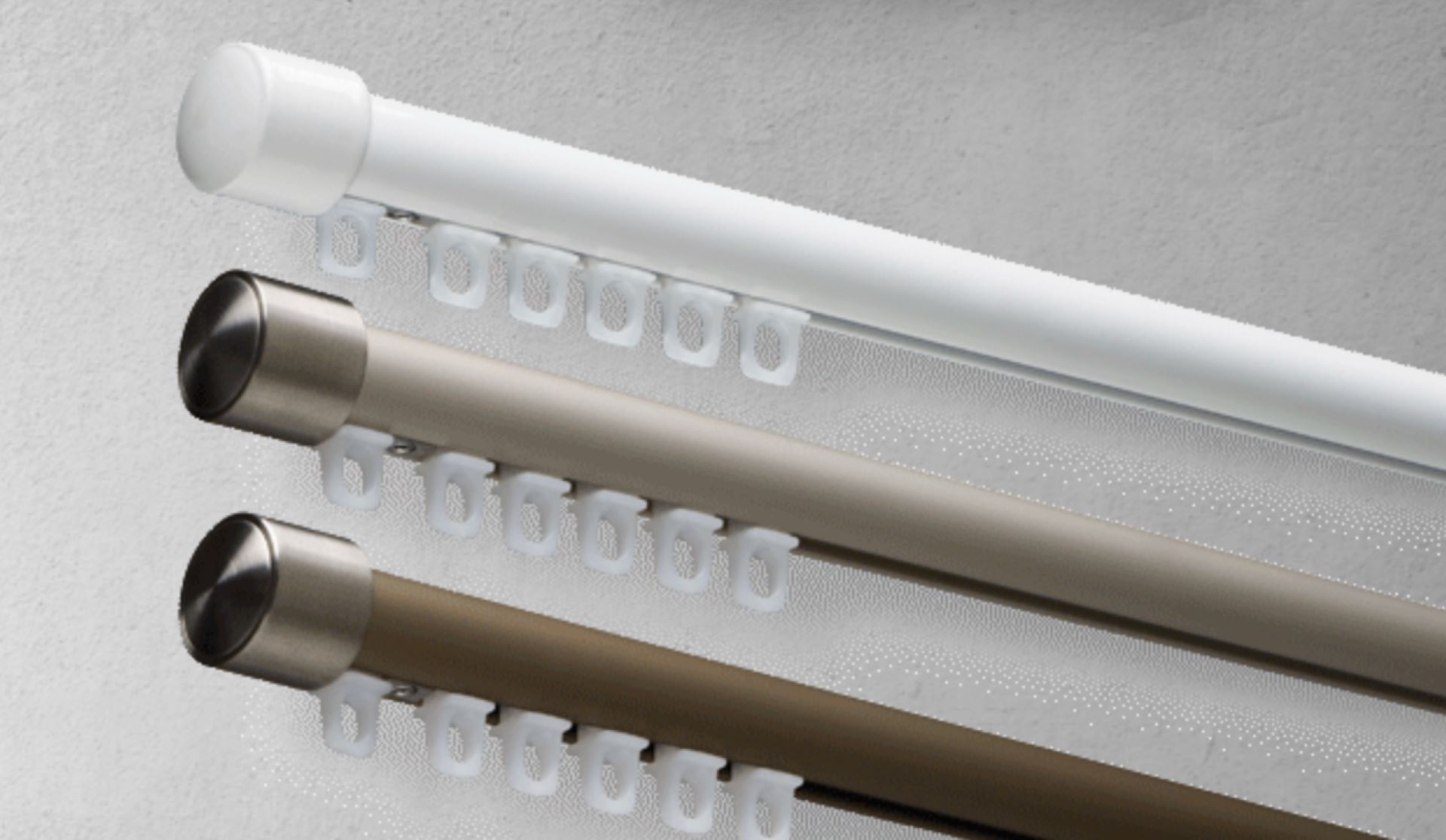
The ripplefold is a popular style that is well-loved by architects and designers. It has a signature “S” fold. The top is constructed with a snap tape that attaches to a track. This allows for a very smooth glide. The hardware is very minimal allowing the eye to focus on the fabric. It is often considered when drapes are tucked into a recessed ceiling, completely eliminating the view of the hardware.
Style: Minimal, sleek, hotel-chic
Also known as: S fold
Note: Ripplefold panels require specialty hardware.

Grommets
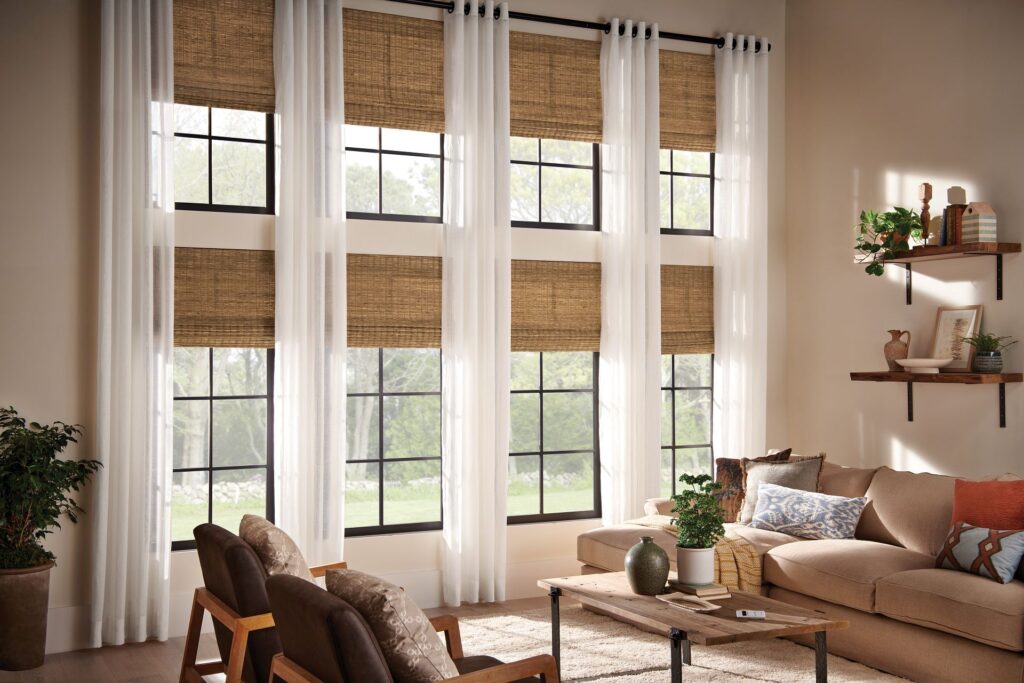
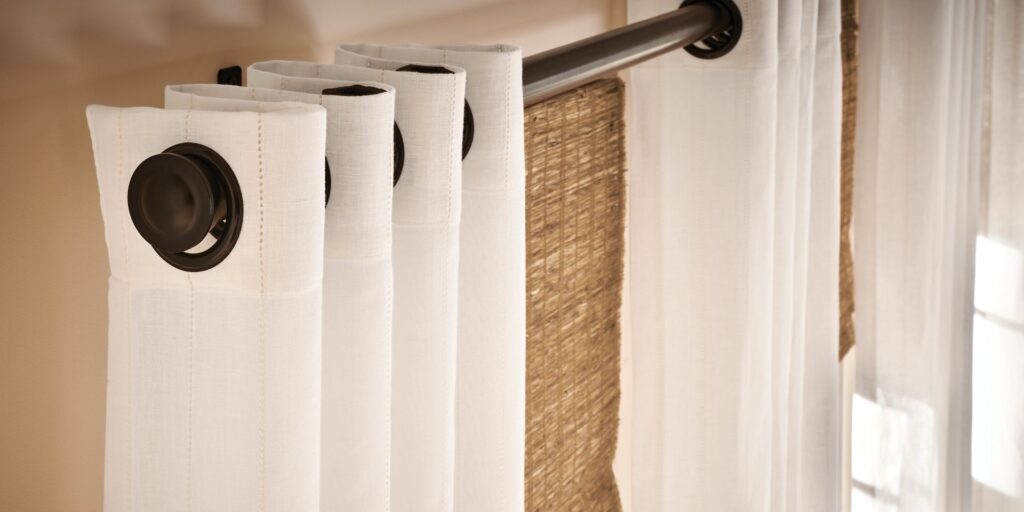
You can opt for grommets instead of traditional drapery rings giving you a lofty look. The volume and drape will be similar to a flat panel.
Style: Casual, industrial
Note: Your panels will extend above the drapery pole. That space will need to be considered when installing the rod height.

Pole Pocket
This is a very budget-friendly option because there is no need for rings or drapery hooks. A pocket is simply sewn into the header allowing you to slide the panel over the rod. It will organically create folds and gathers. We like this style for shorter café curtains. If you plan on opening and closing your drapes often, we do not recommend this style as the panels will not glide as easily across the rod as other top styles. It is recommended for panels that will be stationary most of the time.
Style: Casual, simple
Note: To remove the panel, you will need to remove the rod from the brackets.